

Know the model and the live connection
GPS vs. Cellular Apple Watch for Phone-Light Time
Four connection states explain what the Watch can reach when the paired iPhone stays behind.
“GPS” and “GPS + Cellular” name the hardware. Nearby iPhone, Wi-Fi, cellular coverage and offline preparation describe what the Watch can use right now.
Start with two labels
First, identify the Apple Watch model. A GPS model has Wi-Fi and Bluetooth connectivity. A GPS + Cellular model also contains cellular hardware, yet direct cellular use still requires an eligible activated plan, supported carrier, region, software and coverage.
Second, identify the current connection. Apple Watch generally uses the paired iPhone when it is nearby, a compatible known Wi-Fi network when available, and cellular on an eligible GPS + Cellular setup when the other paths are unavailable. The exact order and availability depend on the Watch and configuration.
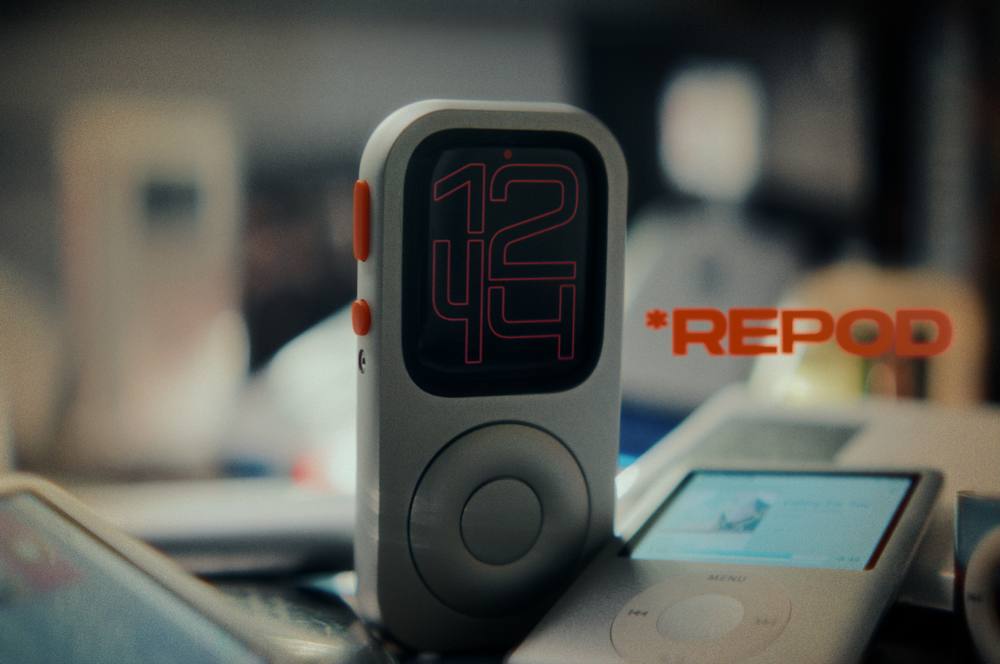
RePod gives a compatible Apple Watch a handheld, pocket-player form. It does not add a modem, cellular plan, Wi-Fi network or app support. Apple Watch remains responsible for watchOS, accounts, connections and services. Match the Watch generation and case size to the current RePod variant before building a phone-light setup in practice.

Compare the four practical connection states
A GPS + Cellular Watch can connect to its carrier away from iPhone and Wi-Fi. It needs a cellular-capable model, supported carrier, eligible account and active plan, completed activation, supported region and software, coverage and a compatible app or service. Apple's same-carrier rule generally applies outside documented Family Setup cases; roaming, battery use and service availability can vary.
A compatible GPS or cellular Watch can use a Wi-Fi network the paired iPhone has joined before. Watch model and supported Wi-Fi band, password access and network type apply. Apple excludes public networks that require a login, subscription or profile, so a remembered café network with a captive portal may still fail.
With no iPhone, Wi-Fi or cellular connection, downloaded music, podcasts or audiobooks and Apple Pay remain among Apple's documented functions. Audio needs advance download and may depend on app, account, subscription, storage, software and supported headphones. Apple Pay requires an eligible card and issuer, setup, supported region and participating merchant or transit system. Offline Maps requires prior download and sync under supported software and regional availability.
Some paths still rely on the paired iPhone even when a cellular Watch has its own network connection. Apple says SMS/MMS and third-party push notifications require the paired iPhone to stay powered on and connected to Wi-Fi or cellular. iMessage also requires the iPhone account to be signed in. App behavior can add further account, phone and service dependencies.
What direct cellular changes
Direct cellular can support calls, messages and live data away from the paired iPhone when the exact Watch, plan, carrier, coverage, account, region and service conditions line up. Availability varies by app. Streaming and navigation also depend on the provider, subscription, network and current software.
Owning a GPS + Cellular model is only the first requirement. The plan must be eligible and activated. Apple states that the iPhone and Watch generally need the same carrier, with documented exceptions for a Watch set up for a family member. Some older or prepaid accounts may be unsupported. Coverage and roaming rules differ by carrier and region.
Control Center shows the live path. Apple uses connection icons to distinguish an iPhone connection, Wi-Fi and cellular. A cellular button can indicate that a plan is active while the Watch is currently using the nearby iPhone or Wi-Fi. Read the current icon before assuming cellular is carrying the session.
A cellular model can still be offline
Coverage can disappear, a plan can be inactive, and an app can require its own account or service. Prepare a downloaded option and a physical fallback for any task the day cannot afford to lose.
What known Wi-Fi can cover
Known Wi-Fi gives both GPS and cellular models another path when the paired iPhone is away. The network must be compatible and previously known through the paired setup. Supported frequency bands vary by Watch model. Password changes can break the remembered connection.
Public Wi-Fi deserves extra care. Apple says Apple Watch cannot connect to public networks that require logins, subscriptions or profiles. A network name appearing in a café, hotel or station does not establish that the Watch can complete its sign-in page. Verify the network before assigning it an essential message, map or call task.
Calls and messages over Wi-Fi still depend on carrier, account, region and service settings. Third-party apps may need their iPhone counterpart, a refreshed login or a supported standalone Watch experience. Test the exact app under the exact network you plan to use.


Separate offline functions from iPhone-dependent ones
Offline preparation creates a dependable baseline. Download the audio to the Watch itself. Sync the map region before departure. Add the eligible payment card and supported Wallet pass in advance. Each item keeps its app, account, issuer, storage, software and regional conditions.
Wallet passes require issuer support. Some passes must first be added through iPhone, and current details may need a connection. Apple Pay has a separate path and can remain available offline after eligible setup, subject to card, issuer, merchant, transit and region support.
Messages are easier to understand when split by type. iMessage, SMS/MMS and third-party push notifications do not share one rule. Apple documents a continued paired-iPhone requirement for SMS/MMS and third-party push notifications: the iPhone must remain powered on and connected. Confirm account sign-in, carrier support and the exact contact path before leaving the iPhone behind.
Before the iPhone stays behind
Connection-state check
- Identify GPS or GPS + Cellular and confirm the exact RePod fit.
- For cellular, confirm carrier support, eligible account, active plan, region, coverage and app compatibility.
- For Wi-Fi, confirm prior network history, supported band, password and absence of a captive portal.
- Download audio and map regions to the Watch before relying on offline use.
- Confirm eligible Apple Pay cards, supported Wallet passes, issuers, merchants and transit systems.
- Test calls, iMessage, SMS/MMS and third-party notifications as separate paths.
- Keep the paired iPhone powered and connected when the chosen message or app path requires it.
- Carry a physical or phone fallback for every essential task that remains unverified.
The model tells you which connections are possible. The live state tells you which connection is available. Preparation decides what remains useful when every network disappears.
Sources and further reading
Know the model and the state